For years, web performance was tucked away in the "technical debt" folder—something for developers to worry about when they had spare time. In 2025, that perspective is a business liability. Speed is no longer a technical checkbox; it is a fundamental pillar of customer acquisition and retention.
The Psychology of the "Instant" Consumer
Human patience on the web has reached an all-time low. Research into user behavior shows that as page load time increases from 1 second to 3 seconds, the probability of a bounce increases by 32%. By 5 seconds, it skyrockets to 90%.
When a site is "performance-first," it respects the user’s most valuable resource: their time. This creates a halo effect for your brand. A fast site feels premium, reliable, and trustworthy. A slow site, regardless of how beautiful the UI is, feels broken.
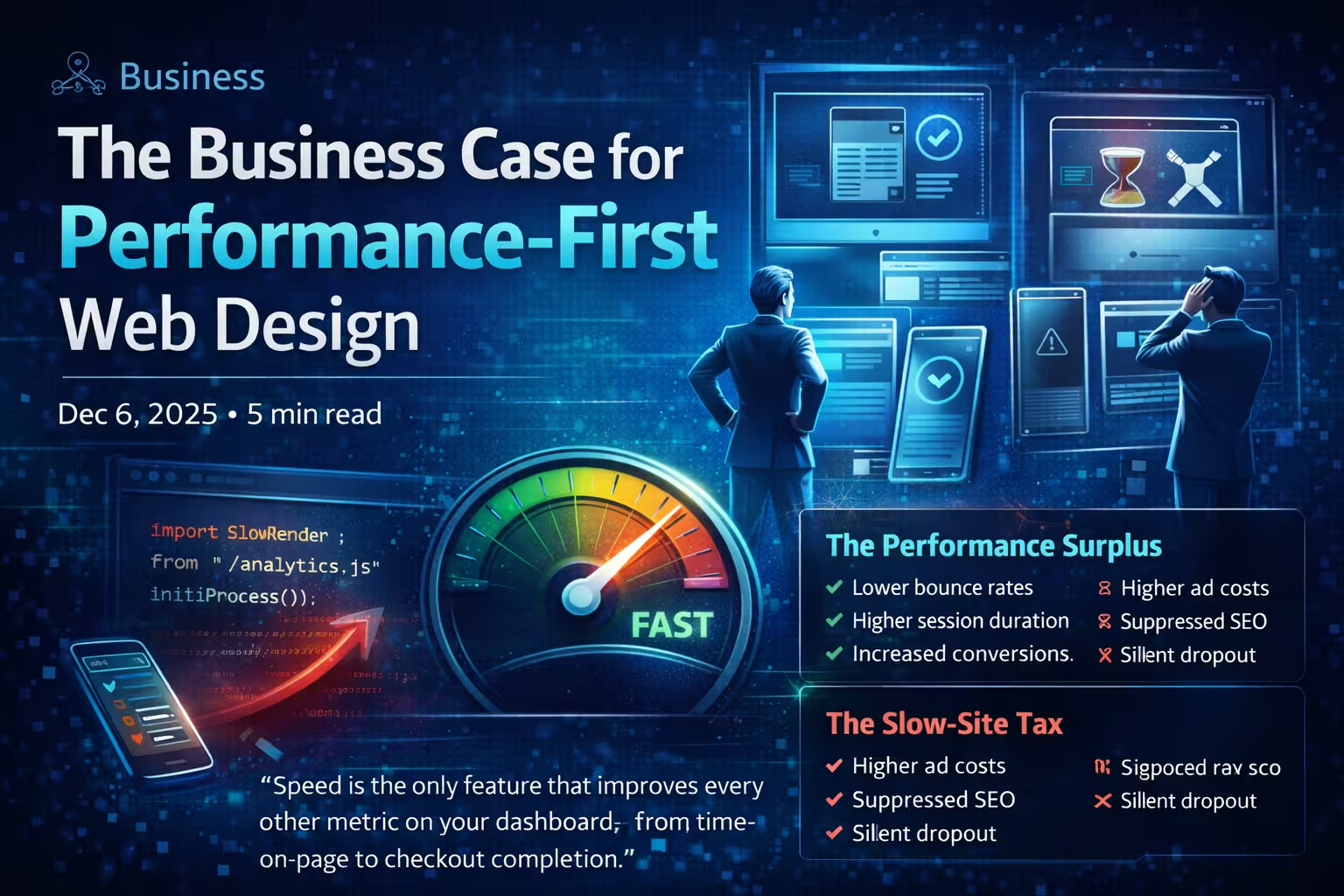
The Performance Surplus
Lower bounce rates, higher average session duration, and increased conversion rates through reduced friction.
The Slow-Site Tax
Higher CPC on ads, suppressed SEO rankings, and "silent" abandonment that never shows up in traditional bug reports.
SEO is Now a Performance Game
Google’s transition to Core Web Vitals (LCP, INP, and CLS) fundamentally changed the SEO landscape. They no longer just rank content; they rank the experience of consuming that content.
Business leaders must understand that you can spend thousands on high-quality content and backlink strategies, but if your technical foundation fails the Core Web Vitals test, your ROI will be capped by a "performance glass ceiling."
The "Silent Killer": Performance Regressions
The most dangerous threat to a digital business isn't a total outage—it's a performance regression. When a site goes down, alerts fire and engineers scramble. But when a new feature release slows the site down by 800ms, no "site down" alarm goes off.
This is why monitoring (using tools like Veloxite) is critical. It’s about moving from a "build and forget" mindset to a "continuous optimization" mindset. By treating performance as a live business metric, you protect your revenue from these silent dips.
"Speed is the only feature that improves every other metric on your dashboard—from time-on-page to checkout completion."
Conclusion: Making the Shift
Adopting a performance-first design philosophy requires a shift in how stakeholders view the web. It means:
- Prioritizing Budgets: Investing in infrastructure and performance monitoring rather than just visual redesigns.
- Developer Empowerment: Giving teams the tools to catch regressions before they hit production.
- Data-Driven Decisions: Correlating load times directly with your conversion funnel.
At the end of the day, a performance-first approach isn't about saving milliseconds; it's about maximizing the efficiency of your digital storefront. In a competitive market, being the fastest is the simplest way to win.