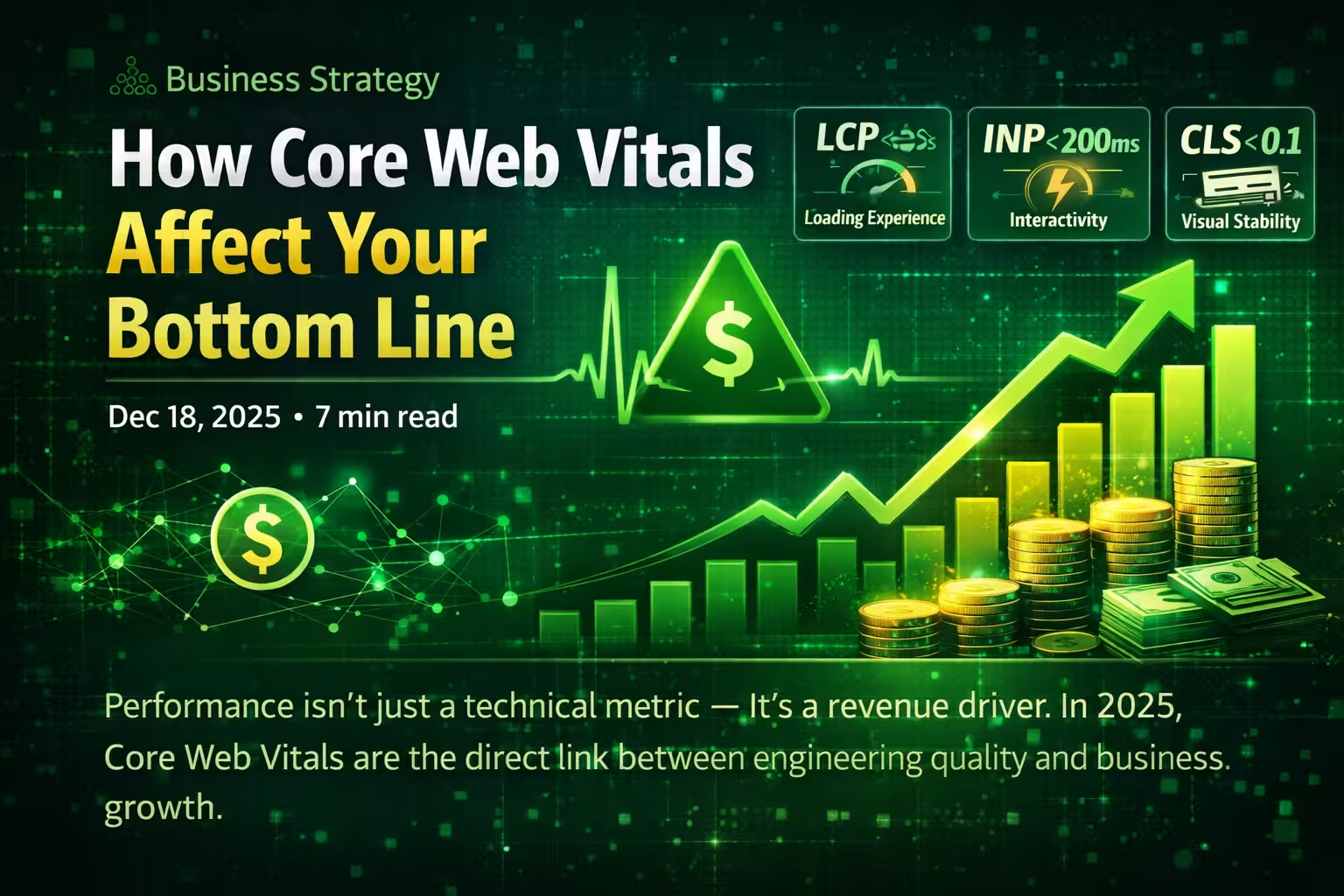
In the digital economy, performance is the silent engine of growth. While many businesses view web design through a purely aesthetic lens, the most successful brands prioritize performance as a foundational feature. If your site is beautiful but slow, you are effectively closing the door on half your customers before they even see your product.
The Direct Correlation: Speed vs. Revenue
Users don’t wait. Every extra millisecond your site takes to load increases friction, frustration, and abandonment. Google’s research consistently shows that as page load time goes from 1s to 3s, the probability of bounce increases by 32%.
Core Web Vitals (CWV) quantify this experience using real-user data (RUM). By monitoring these metrics, businesses can finally move past "gut feelings" and correlate technical health with actual dollar amounts.
LCP
Loading Experience
INP
Interactivity
CLS
Visual Stability
1. Largest Contentful Paint (LCP)
LCP measures your "Digital First Impression." When LCP exceeds 2.5 seconds, users perceive the site as sluggish. This triggers a negative feedback loop:
- Higher bounce rates: Users leave before the page is fully interactive.
- SEO Suppression: Google signals your page as "poor quality," reducing organic visibility.
- Ad Waste: You pay for clicks that bounce before your tracking pixel even fires.
2. Interaction to Next Paint (INP)
INP is the newest Core Web Vital, measuring the delay between a user action (like clicking "Add to Cart") and the visual response. This is the "Friction Metric."
Laggy buttons destroy brand trust. Improving INP by just 50ms can lead to double-digit increases in transaction success rates, particularly for mobile users on varied network speeds.
3. Cumulative Layout Shift (CLS)
CLS measures visual stability. We’ve all experienced a page shifting just as we’re about to click. This doesn't just annoy users; it creates "accidental friction" that kills conversion momentum.
"Performance is not a technical luxury; it is the infrastructure upon which your conversion rate is built."
The Competitive Edge of "Performance Monitoring"
Performance is not a one-time project. It is a moving target. Every new deployment, third-party marketing script, or high-res hero image can silently degrade your metrics.
This is where Continuous Monitoring becomes a business necessity. Without a tool like Veloxite, you are flying blind—waiting for your monthly revenue report to show a drop before realizing there was a performance regression weeks ago.
Summary: The ROI of Speed
The data is undeniable: improving page speed by just 100ms can increase conversion rates by up to 8%. For an enterprise, that's not just a technical win—it's a massive unlock in annual recurring revenue.