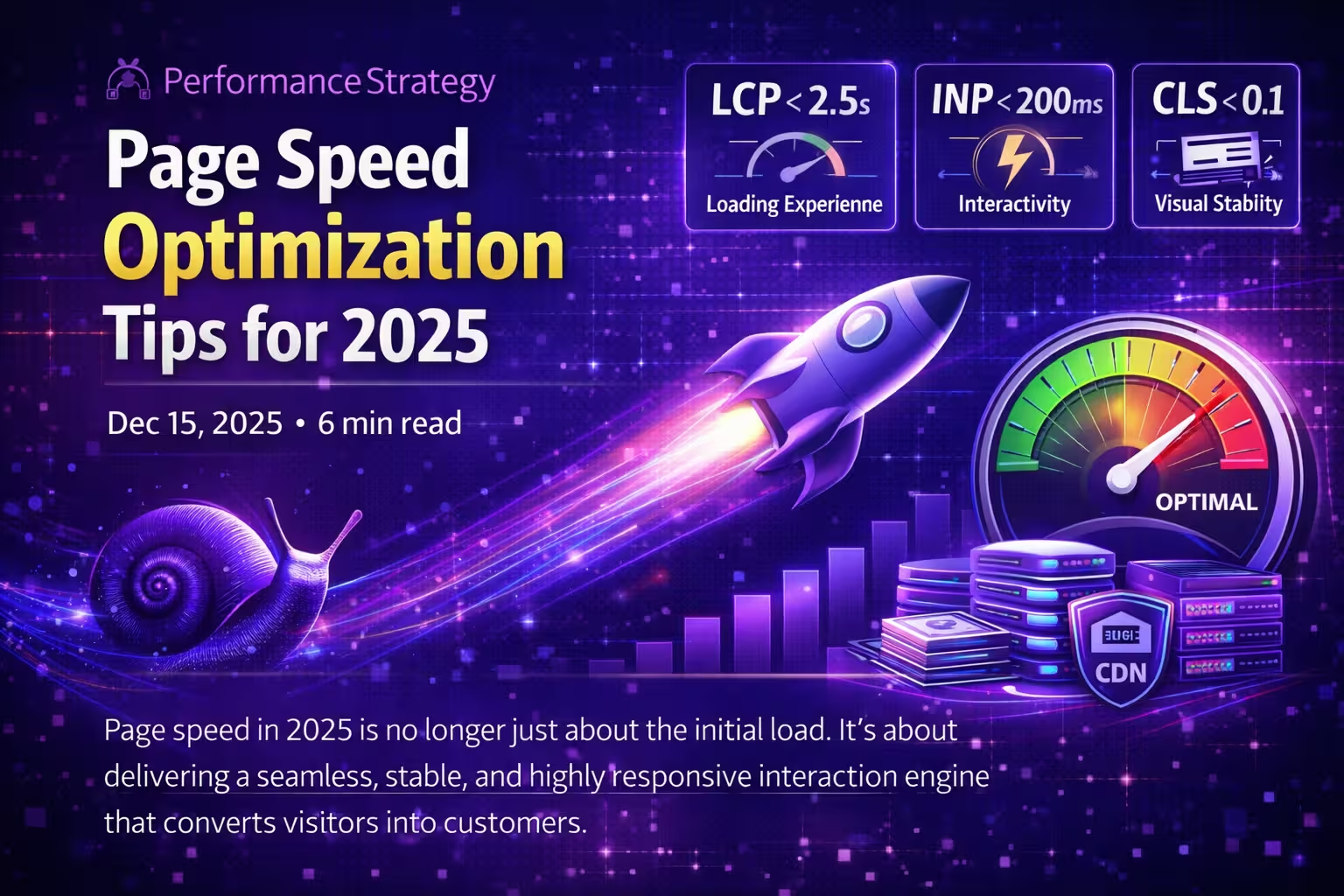
Beyond the Loading Spinner
In the current landscape, users don't just demand that a page shows up quickly; they demand that it responds instantly. With the full integration of Interaction to Next Paint (INP) into Google's Core Web Vitals, the industry has shifted from "how fast it loads" to "how fast it feels."
1. Modern Visual Orchestration
Stop treating images as static assets. Use modern pipelines to ensure they never block the main thread.
- Adopt AVIF for 30% better compression than WebP.
- Use
priorityhints for hero images to boost LCP. - Explicitly define aspect ratios to eliminate Layout Shift (CLS).
2. Pruning the JavaScript Tree
JavaScript is the primary culprit behind poor INP scores. In 2025, less is more.
- Audit 3rd-party tags—marketing scripts are often "silent" performance killers.
- Implement component-level code splitting.
- Use
requestIdleCallbackfor non-essential logic.
3. The Power of the Edge
No amount of frontend optimization can compensate for a slow Time to First Byte (TTFB). Move your logic as close to the user as possible. Using Edge Functions and global CDN caching ensures your HTML document reaches the browser in milliseconds, giving your frontend a massive head start.
"Optimization is a continuous cycle. The moment you stop monitoring is the moment your performance starts to decay."
4. Stop Guessing: Monitor the Field
You can achieve a perfect 100 on your local Lighthouse test and still fail Google's real-world assessment. This happens because Lighthouse tests your site in a "lab"—clean, fast, and predictable.
Real users have slow 4G connections, old hardware, and erratic network latency. To truly optimize for 2025, you need to monitor Field Data (CrUX) trends.
By using Veloxite to automate PageSpeed Insights audits, you get a 24/7 view of both your technical diagnostics (Lighthouse) and the real-world signals Google uses to rank your site.
5. Defend Your Gains with Regression Alerts
The most common cause of speed loss isn't one big mistake—it's ten small ones. A new A/B test script here, an unoptimized hero image there. Continuous monitoring allows your team to catch these performance regressions the moment they happen, rather than finding out from a traffic drop in your SEO reports three weeks later.
Summary
Speed is a feature. In 2025, the winners will be the teams that treat performance as a live product metric. Optimize aggressively, monitor the field data, and never let a regression go unnoticed.